Most people spend six months planning a trip to Machu Picchu and still arrive exhausted, overcharged, and staring at fog for three hours — this Machu Picchu travel guide exists to make sure you’re not one of them. This Machu Picchu travel guide is built for travelers who value time, clarity, and execution over guesswork.
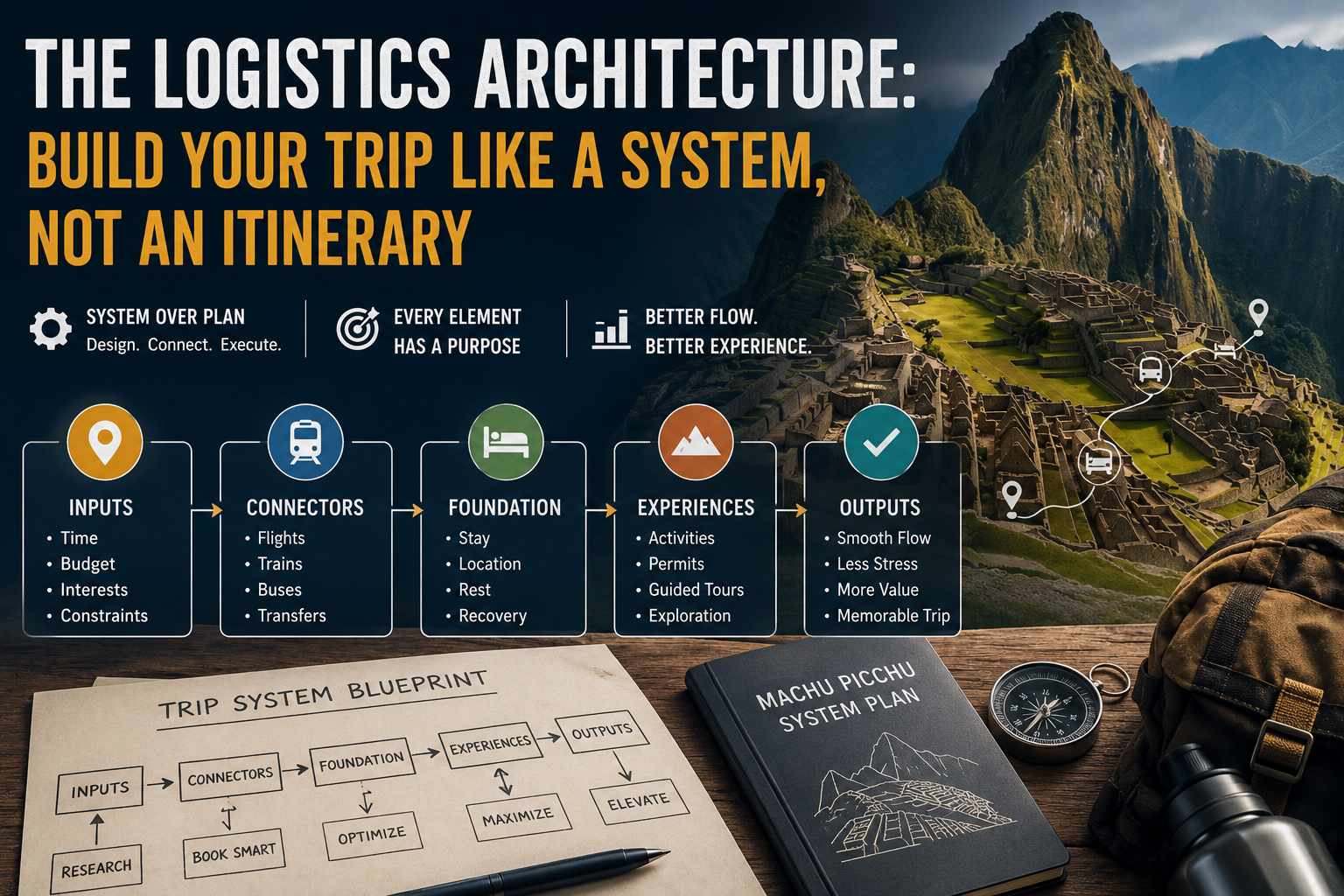
The Logistics Architecture: Build Your Trip Like a System, Not an Itinerary
This Machu Picchu travel guide starts with logistics — because execution determines everything.
Every high-efficiency trip to Machu Picchu starts with one non-negotiable decision: you control your entry window, or the crowds control your experience.
The Peruvian Ministry of Culture caps daily visitors at roughly 4,500 across two timed entry circuits — Circuit 1 (lower agricultural terraces) and Circuit 2 (the classic Sun Gate and Temple of the Sun route). Book your tickets directly at machupicchu.gob.pe, never through third-party aggregators who markup by 40–60% and offer zero flexibility on rescheduling. Tickets go live 6 months in advance. Set a calendar reminder, something every Machu Picchu travel guide should emphasize.
The optimal entry slot is 6:00 AM, Circuit 2. You hit the site before four-hour coach convoys from Cusco arrive, and morning light on Huayna Picchu mountain produces the photographic conditions most travelers post online without ever actually seeing in person.
Base camp decision: Aguas Calientes (now officially called Machu Picchu Pueblo) sits at the base of the mountain. Budget two nights minimum — one before entry, one after — to avoid the expensive, rushed logistics of same-day travel, a detail often overlooked in a typical Machu Picchu travel guide. A clean, well-located mid-range hostel like El MaPi or Supertramp Hostel runs $35–$80/night. Skip the luxury hotels unless you’re billing a client; they offer nothing the citadel itself doesn’t.
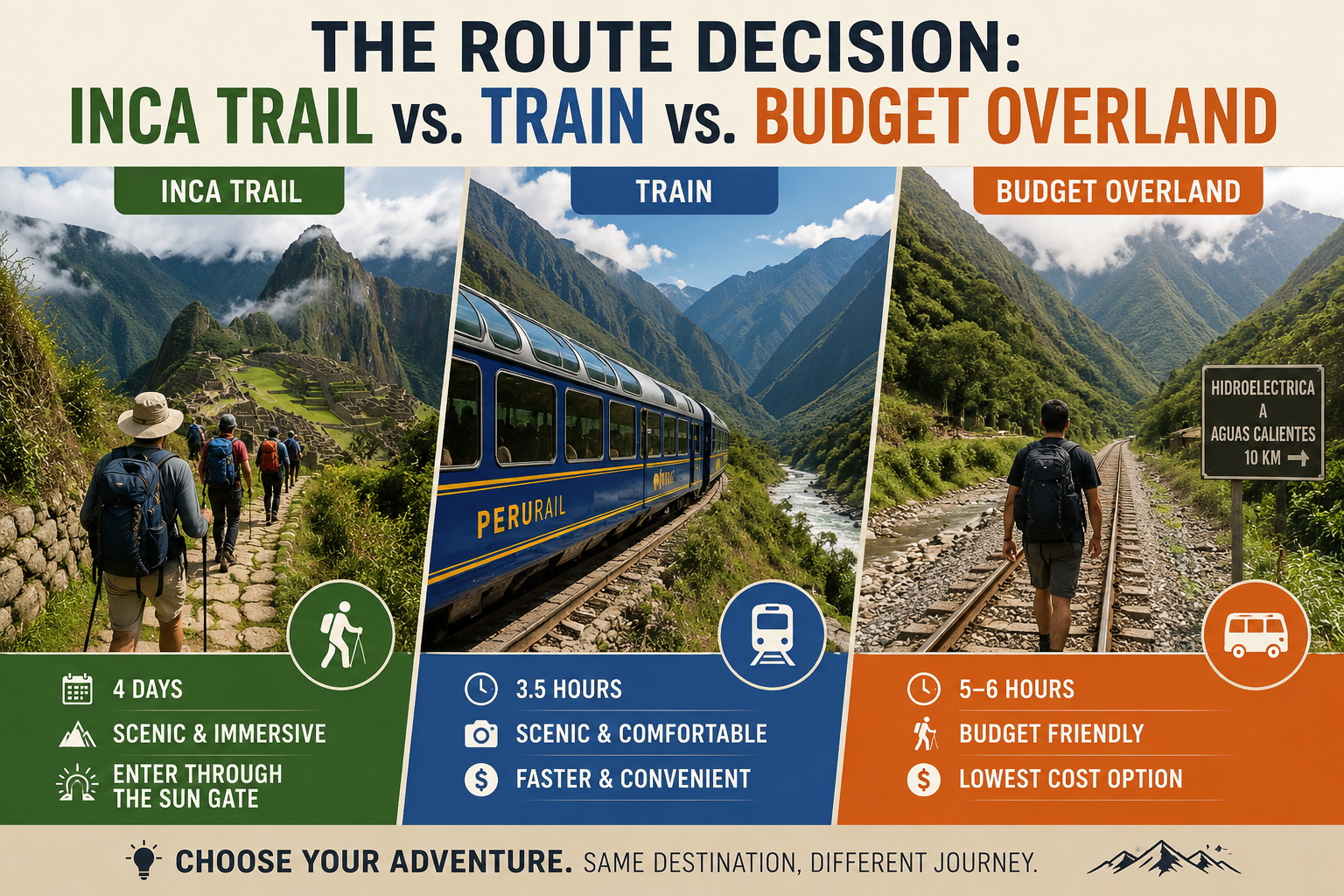
The Route Decision: Inca Trail vs. Train vs. Budget Overland
This Machu Picchu travel guide separates travelers into two categories:
A well-structured Machu Picchu travel guide forces this decision early — not after you’ve already booked transport.
those who want the journey to be part of the destination, and those who want to optimize for time at the site itself. Neither is wrong — but conflating them destroys both experiences.
Inca Trail (4 days, $600–$900 USD all-in): Permits sell out within hours of going live in October for the following year’s high season (May–September). Book through licensed operators like Alpaca Expeditions or Llama Path. You arrive at the Sun Gate at dawn on day four, entering Machu Picchu from above — an experience the train cannot replicate. This route makes sense if you allocate the trip specifically around it.
Vistadome Train from Cusco (3.5 hours, $60–$120 one way): Peru Rail and Inca Rail both operate panoramic trains from Poroy station (15 minutes outside Cusco by taxi) or from Ollantaytambo in the Sacred Valley (90 minutes from Cusco). The Ollantaytambo departure cuts 45 minutes of travel and drops ticket prices by $20–$30. For digital nomads with tight schedules, the train is the correct call.
Budget Overland (5–6 hours, $8–$15): Cusco → Hidroeléctrica via shared van (departs Santa Teresa), then a 10km flat walk along the train tracks to Aguas Calientes. This route takes half a day, requires fitness, and rewards with near-zero tourist traffic. Recommended for travelers who want to compress costs without compressing experience. Avoid it if you’re arriving the same day you plan to enter the ruins.
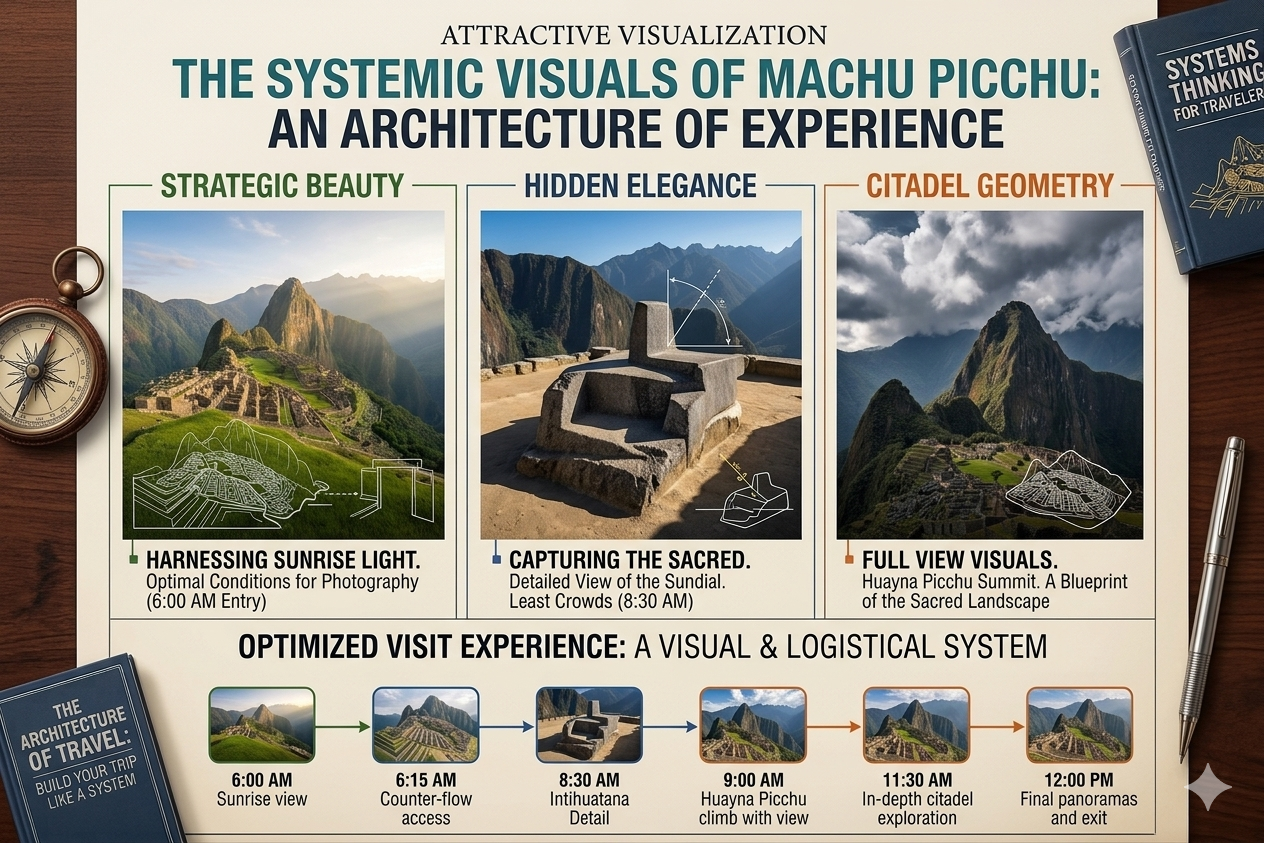
Inside the Citadel: Time Optimization and What Most Travelers Miss
Any effective Machu Picchu travel guide focuses on time optimization inside the citadel — because this is where most travelers waste hours.
A standard guided group tour at Machu Picchu lasts 2.5 hour and covers 40% of the accessible site. Use this Machu Picchu travel guide framework instead: allocate 4–5 hours, hire a licensed private guide for the first 90 minutes ($30–$50), then explore independently for the remainder.
Sequence your visit strategically:
Start at the Agricultural Terraces near the main entrance. Crowds funnel immediately toward the Temple of the Sun and the iconic llama-dotted overlook — so move against traffic first. By the time you loop back to the primary viewpoints, the initial surge thins by 30–40%.
The Intihuatana Stone (the sacred sundial) sees the least foot traffic between 8:30–9:30 AM. Sit with it. Archaeologists still debate whether it functioned as an astronomical calendar or a ritual anchor for the sun during winter solstice — the ambiguity is the point.
Huayna Picchu Mountain (the peak looming behind every iconic photo) requires a separate ticket capped at 400 people per day, split across two time slots: 7:00–8:00 AM and 9:00–10:00 AM. Book it simultaneously with your main ticket. The 45-minute climb is steep — real hands-and-feet steep — but the summit view reveals the citadel’s full agricultural and ceremonial geometry in a way the valley floor never can, making it a highlight in any serious Machu Picchu travel guide.
Skip Machu Picchu Mountain unless you’re specifically chasing altitude records; it offers a less dramatic viewpoint for twice the climb time.
Pack: two liters of water (no vendors inside), a light rain layer (afternoon clouds arrive daily between November–March), and a physical backup of your ticket — the QR scanner at the gate fails roughly 20% of the time on mobile screens.
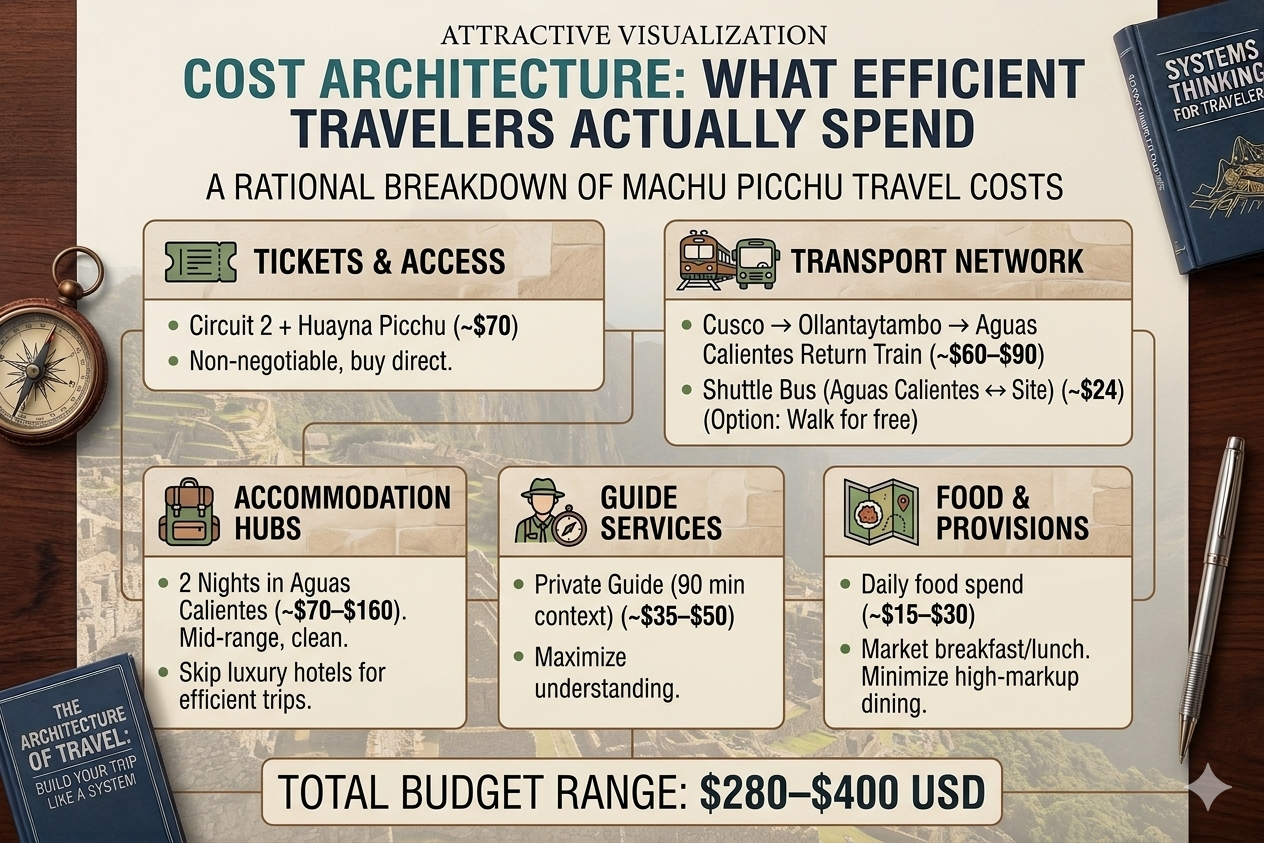
Cost Architecture: What Efficient Travelers Actually Spend
No Machu Picchu travel guide is complete without a clear cost breakdown. A well-executed trip to Machu Picchu from Cusco, optimized for experience-per-dollar, breaks down as follows across a 3-day execution:
Entrance ticket (Circuit 2 + Huayna Picchu): $70 USD — non-negotiable, buy direct.
Transport (Cusco → Ollantaytambo → Aguas Calientes return): $60–$90 via train.
Shuttle bus from Aguas Calientes to the site gate: $24 round trip — or skip it and walk the 8km switchback path in 90 minutes for free. Walkers arrive at the same time as the first bus, given the queue.
Accommodation in Aguas Calientes (2 nights): $70–$160 depending on standard.
Private guide (90 min): $35–$50.
Food: Aguas Calientes restaurants markup aggressively. A $5 market breakfast and a packed lunch drop your daily food spend below $15.
Total realistic budget: $280–$400 USD for a 3-day execution excluding flights to Cusco. Travelers who don’t pre-book tickets, eat every meal at tourist restaurants, and take the direct Cusco train routinely spend $500–$700 for an objectively worse experience.
One cost decision most guides skip: altitude acclimatization in Cusco. At 3,400 meters, Cusco sits 900 meters higher than Machu Picchu. Spend 2–3 days in Cusco before heading down — not as a tourism add-on, but as a physiological prerequisite. Altitude sickness costs far more in lost days than an extra hostel night.
Machu Picchu rewards preparation with access to an entirely different version of itself — quieter, sharper, and more structurally legible than the one most tourists photograph. Use this Machu Picchu travel guide as an operational blueprint, not a reading list, and the citadel stops being a bucket-list checkbox and starts being one of the few places on earth that actually exceeds its reputation.
written by : http://theheritagecrafts.com