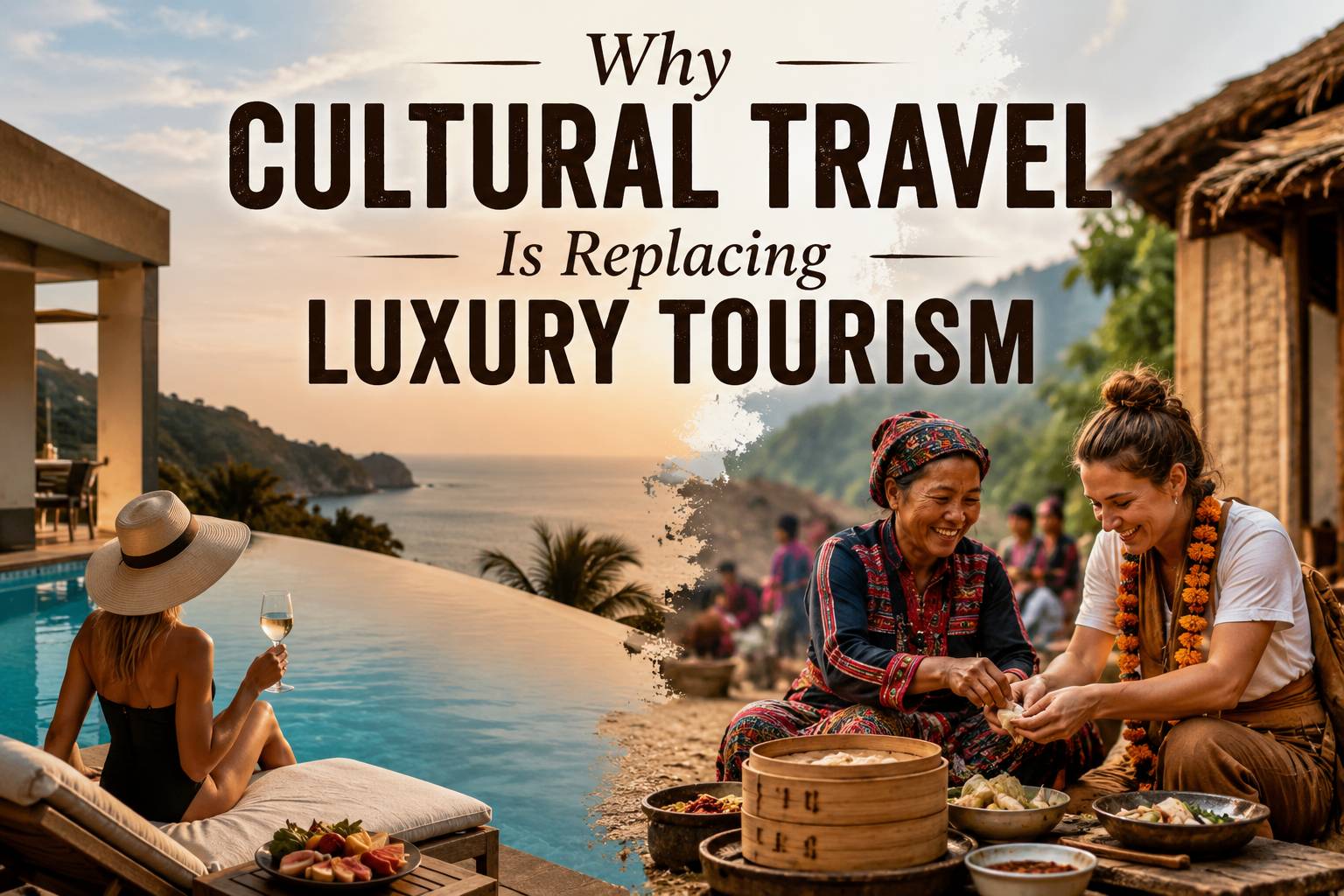
Cultural travel is replacing luxury tourism as the most powerful shift in global travel behavior in 2025. The most coveted travel experience in 2025 has no thread-count rating, no Michelin stars, and no infinity pool — it has a grandmother teaching you how to roll momos in a Kathmandu kitchen.
The shift is measurable and unmistakable. According to the World Travel & Tourism Council’s 2024 data, cultural travel now accounts for 40% of global tourism revenue, growing at nearly twice the rate of traditional luxury segments. Travelers aren’t abandoning comfort — they’re redefining what comfort means. And increasingly, that definition centers on meaning, connection, and the irreplaceable texture of real human culture.
The New Status Symbol Is a Story, Not a Suite
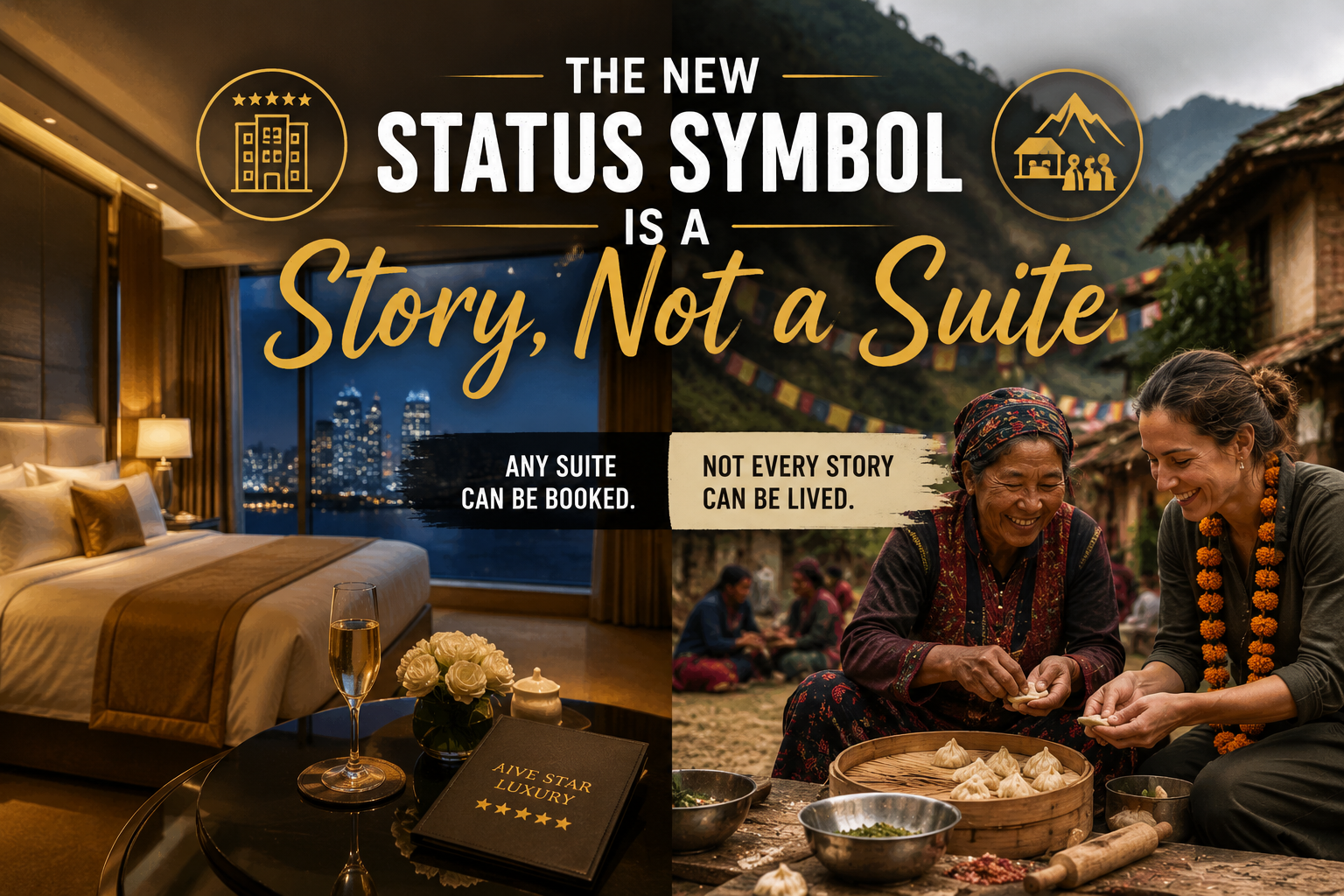
For decades, luxury tourism sold a version of travel that looked the same everywhere: marble lobbies, high-thread-count sheets, and curated distances from anything “local.” The five-star hotel in Bangkok could be a five-star hotel in Dubai — identical in every way that mattered to its target audience. Cultural travel is disrupting this model completely.
That sameness became the problem.
Modern travelers — particularly millennials and Gen Z, who now represent the fastest-growing segment of high-spending tourists — treat experiential authenticity as a proxy for social currency. A 2023 Booking.com survey found that 72% of travelers prioritize experiences that connect them to local culture over accommodation quality. The return-from-travel conversation has shifted. Nobody at a dinner party leans forward when you describe your suite’s ocean view. They lean forward when you describe learning natural dye techniques from a Oaxacan artisan cooperative, or sleeping in a converted cave dwelling in Matera with a family that has lived there for six generations.
Why cultural travel is replacing luxury tourism comes down to this psychological pivot: status now derives from access to the unreplicable, not access to the expensive. You cannot buy your way into a genuine village harvest festival. You cannot manufacture the feeling of a local fisherman teaching you his grandfather’s net-casting technique at dawn. Those experiences require cultural intelligence, relationship-building, and a willingness to subordinate comfort to curiosity. That difficulty is precisely what makes them valuable.
Authenticity Sells What Luxury Cannot Manufacture
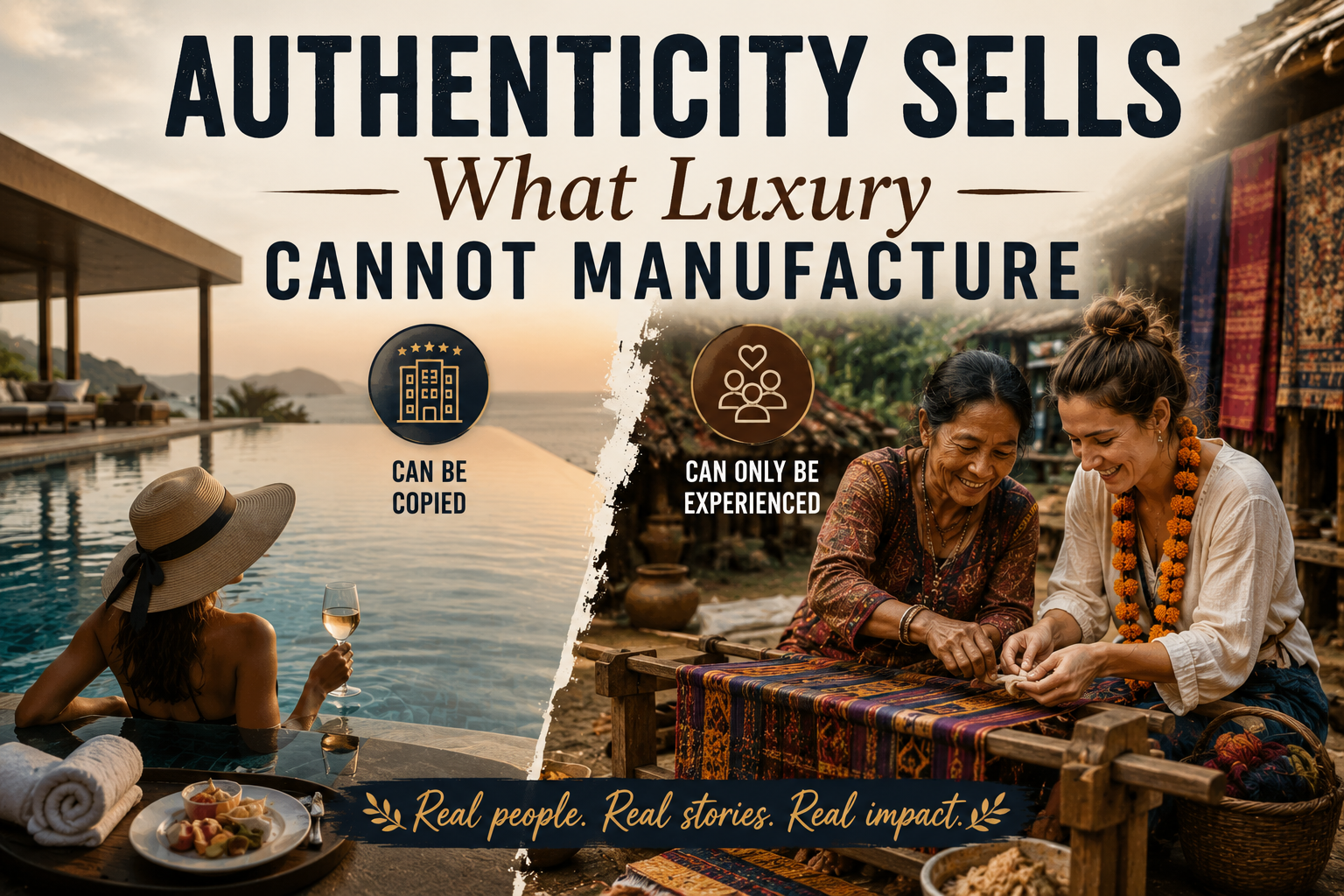
The luxury travel industry understood spectacle. It never fully understood intimacy. Cultural travel focuses on immersion instead of comfort.
Cultural travel delivers intimacy at scale — and travel entrepreneurs are building entire business models around it. Companies like Airbnb Experiences, Intrepid Travel, and G Adventures have all pivoted their growth strategies toward immersive, community-embedded itineraries. Intrepid Travel reported a 47% revenue increase in 2023, driven almost entirely by its small-group cultural immersion tours — not its comfort-tier offerings.
What drives this demand? Travelers want to feel the place, not just see it. There’s a meaningful difference between visiting a Moroccan medina on a guided tour bus and spending three days learning traditional zellige tilework from a master craftsman in Fès. The second experience produces something the first cannot: competence, relationship, and a material object the traveler made with their own hands. Those outcomes generate memories that outperform any luxury amenity on every psychological measure of travel satisfaction.
Research from Cornell University’s Center for Hospitality Research supports this directly. Their studies on “experiential consumption” consistently show that experiences producing personal growth, skill acquisition, or community connection generate significantly higher long-term satisfaction than purchases of luxury goods or services — including travel services. Why cultural travel is replacing luxury tourism reflects this deeper truth about human psychology: we remember who we became more than what we consumed.
The Economics Have Shifted — And Destinations Noticed
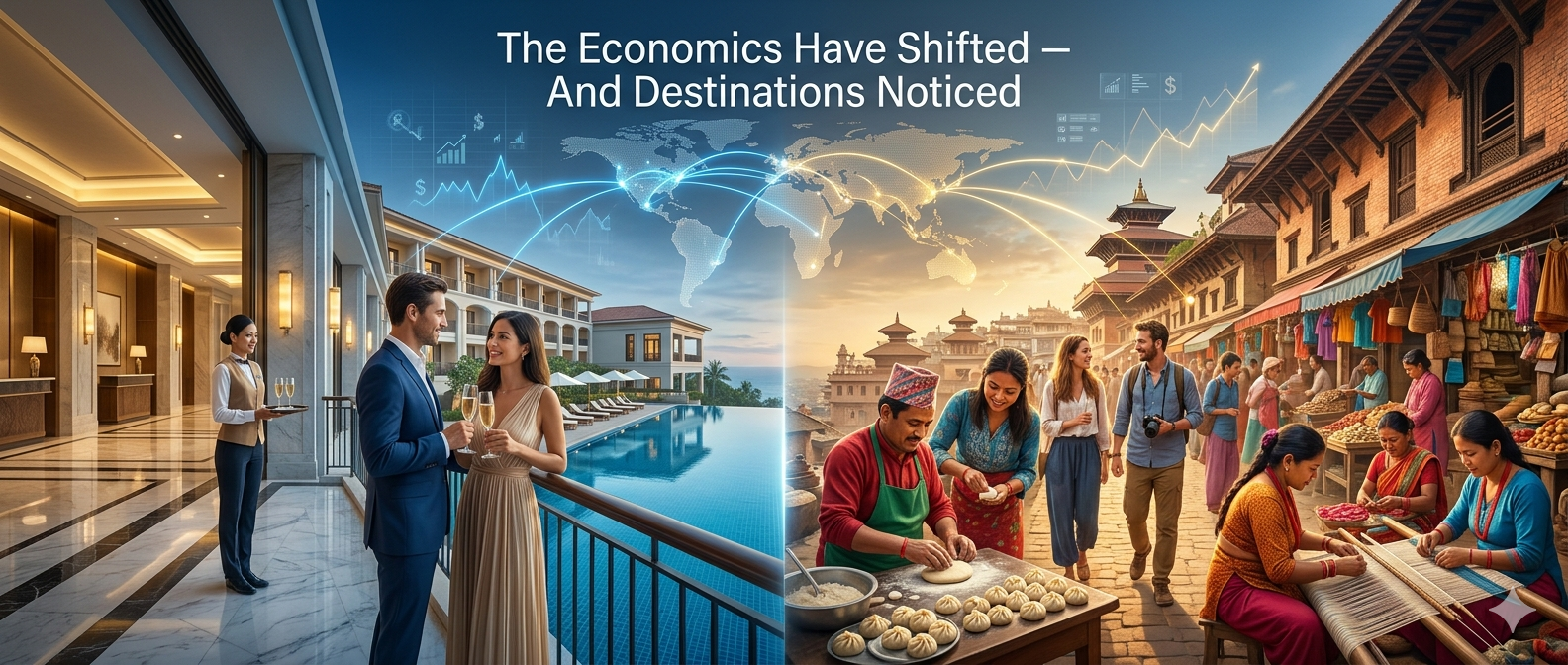
Luxury tourism concentrates wealth at the top of the hospitality supply chain. Cultural travel spreads income across local communities. A $700-per-night international hotel chain captures most of that revenue internally — through its own restaurants, spas, and branded experiences. Cultural tourism distributes spending differently.
When a traveler hires a local guide, eats at family-run restaurants, purchases handcrafted goods directly from artisans, and stays in community-owned guesthouses, the economic multiplier effect for the destination community is dramatically higher. The UNWTO estimates that community-based tourism returns three to four times more income to local populations than conventional resort-based tourism.
Destinations across the Global South have taken notice. Rwanda has restructured its entire tourism brand around cultural immersion and conservation, positioning gorilla trekking and community village visits as premium experiences that justify prices rivaling traditional safari luxury. Peru’s Sacred Valley communities now offer multi-day cultural residencies — cooking, weaving, agricultural rituals — that command $200 to $400 per person per day. These aren’t budget experiences. They’re luxury experiences reimagined through a cultural lens, and they sell out months in advance.
Travel entrepreneurs who recognize this shift are building agencies, platforms, and content brands around the intersection of cultural depth and premium positioning. The market gap they’re filling isn’t between expensive and affordable — it’s between shallow and meaningful.
The Post-Pandemic Traveler Wants Return on Experience
COVID-19 didn’t create the cultural travel movement, but it accelerated it with a force nothing else could. Eighteen months of enforced stillness forced a global reckoning with what travel actually provides. When people could finally move again, many found they no longer wanted to replicate their pre-pandemic itineraries. The “same beach, same pool, same cocktail” cycle felt hollow against the backdrop of genuine loss and reordered priorities.
Exit surveys from major travel booking platforms in 2022 and 2023 showed a consistent pattern: travelers returning after COVID-19 lockdowns ranked “learning something new,” “connecting with local people,” and “understanding a different way of life” as their top three travel motivations — outranking relaxation, luxury, and social media content for the first time in recorded survey history.
Why cultural travel is replacing luxury tourism becomes clearest through this lens. Travelers now approach trips with an ROE mindset — return on experience. They want to come back changed. They want to return with language phrases they didn’t know, techniques they can teach their children, friendships that produce WhatsApp messages six months later, and a revised understanding of how other humans navigate being alive.
A $500-per-night resort offers comfort. A week living with a multigenerational Basque farming family, helping with the harvest and sharing meals cooked over wood fires, offers transformation. For a growing majority of modern travelers, that distinction decides everything.
The travelers shaping the next decade of tourism aren’t chasing thread counts — they’re chasing the kind of understanding that only comes from standing inside another culture’s daily life. Cultural travel isn’t a trend replacing luxury tourism; it’s a correction, pulling the entire industry back toward the reason humans started exploring in the first place.
written by : https://theheritagecrafts.com/